Exploring abandoned soviet missile bases in remote Estonia
Images by Haus of Hiatus
Having grown up in the late eighties and early nineties, I had a strange curiosity in exploring the remnants of Estonia's Cold War history, and both the Rohu and Kadila missile bases offer intriguing insights into the country's military past.
Located some 25 kilometres from Rakvere, the Rohu rocket base was once a vital part of the Soviet nuclear rocket complex established during the 1960s, but now lies largely in ruins. Interestingly located near a recreated Forest Brother’s bunker, I found it fascinating that anyone can walk around the remnants of rocket hangars, service facilities, and launch pads where the feared R-12 was once housed.
From the information I could find online, its operational years were between 1960 and 1970, where the Rohu rocket base was a hub for the 304th Rocket Regiment of the Soviet Union Guards.
Situated amidst the forests of Rohu-Lebavere, the base housed divisions responsible for servicing the R-12 missiles, capable of carrying nuclear warheads up to 2,000 kilometres (which would put most of Europe and the UK within striking range). The base was heavily fortified, surrounded by double-barbed wire fences equipped with high-voltage currents and monitored by machine gun emplacements.
Touring around the site, it was clear to see the base was divided into different zones, each serving specific functions. Research suggests the first zone housed administrative and operational facilities, while the second zone accommodated soldiers' quarters and support services. The most critical area was the combat zone, featuring specialised facilities for rocket storage, assembly, and launch.
Despite their current state of disrepair, the bases serve as important historical landmarks, shedding light on Estonia's complex legacy. Cycling around the remnants of these once-secret installations, helped me to contemplate the impact of geopolitical tensions and the enduring legacy of military technology on the landscape of modern Estonia.
You might also like:
Showcasing the extraordinary skill, balance, and focus required in the sport, Red Bull Slack Warrior 2025 competition took place on 9th August at Noblessner Harbour in Tallinn, Estonia, marking the third edition of this high-energy slacklining event in the country.
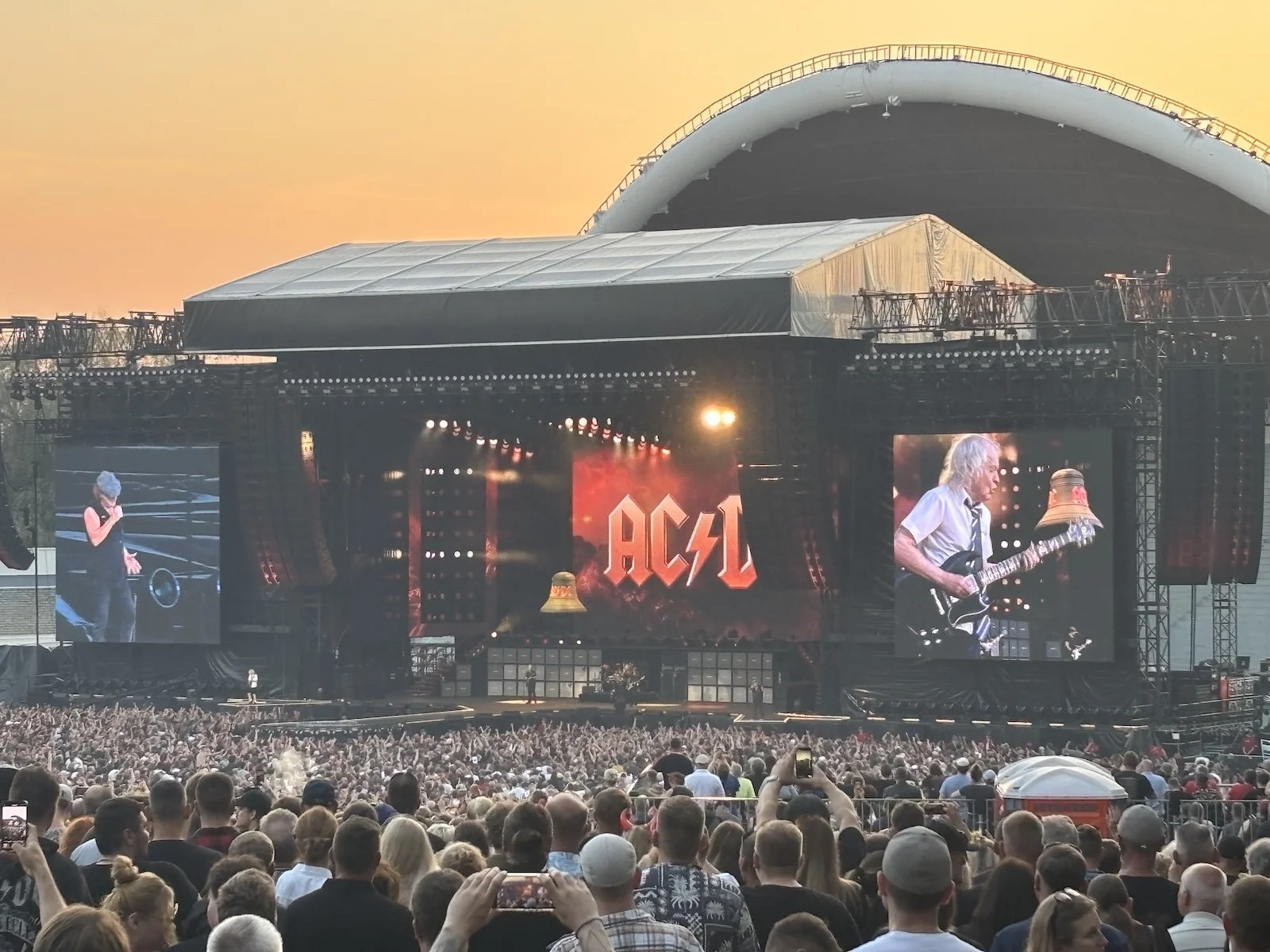
On 24 July 2025, Tallinn hosted one of its biggest ever concerts when rock legends AC/DC brought their Power Up tour to the Song Festival Grounds. It was the band’s first time performing in Estonia and anticipation had been building for months, with tickets selling out well in advance.
Tucked away in northern Tallinn near the Viimsi peninsula, the Rohuneeme rocket base, is one of Estonia’s most intriguing yet lesser-known Cold War relics.
Housed in a historic power station building originally constructed in 1913, the Energy Discovery Centre in Tallinn, Estonia, is an engaging science and technology museum dedicated to exploring the fascinating world of energy, electricity, and physics.
Facing the Russian fortress of Ivangorod across the river, Narva Castle, also known as Hermann Castle, stands on the banks of the Narva River in Estonia, marking the easternmost boundary of the European Union.
Patarei Prison (‘The Battery’ in English), located in Tallinn, Estonia, is a chilling and historically significant site that reflects the nation’s turbulent history, that we had a chance to tour in winter 2024.
After hearing about a ghostly relic from the last century, we decided to travel to the furthest reaches of Europe to visit a decaying but fascinating former factory located on an island next to the Russian border.
Shepard Fairey's Photo Synthesis exhibition at Fotografiska Tallinn is a wonderful, intricate and impactful exploration of his artistic journey, running until March 2025.
Despite not featuring a single Banksy original, we were excited to visit an unauthorised Banksy exhibition that’s been touring around Europe since 2021.
The Ennuksemäe Forest Brothers’ bunker is a fascinating historical site located near Viljandi, Estonia. This bunker is significant as it represents the resistance efforts of the Forest Brothers, a group of Estonian partisans who fought against Soviet occupation after World War II.
Having spent the last few years exploring Estonia in a tent with a bike, 2024 seemed like a good time to sample and document more of Estonia’s rich history particularly the ample manor houses and castles!
Kernu Manor, is located about 35 kilometres southwest of Tallinn, and a historical gem with a rich past that reflects the country’s aristocratic heritage.
Located some 25 kilometres from Rakvere, the Rohu rocket base was once a vital part of the Soviet nuclear rocket complex established during the 1960s, but now lies largely in ruins.
The sea mines factory on Naissaar island, located in the Gulf of Finland, approximately 8 kilometres northwest of Tallinn, is one of the island’s most intriguing historical military sites, reflecting its strategic military significance during the 20th century.
My second bikepacking expedition to prepare me for the Silk Road Mountain race comes quite possibly as a result of playing too much Tomb Raider as a teenager when I hear about a sunken prison building in the middle of a lake that’s around 40 kilometres away from Estonia’s capital city, Tallinn that I’m exploring as a digital nomad.
In July 2022, I took a ferry to the little-known island of Aegna, located close to Tallinn, Estonia. At just 3 km², it’s a small island, however Aegna is unique are its well preserved former military sites, including artillery, coastal defensive positions, and fortification from different periods. Walking around these old military sites really felt like taking a step back in history and an unforgettable experience.
In my quest to train for the Silk Road Mountain Race, I decided to squeeze in an 80-kilometre, 2-day mini bikepacking expedition during the week to test out my bike’s setup, find gaps in my preparation, build conditioning and more fitness, experience Estonia’s summer temperatures, and see what kit I might need for bigger bikepacking trips (like tackling the 500-kilometre Eurovelo 11 route that I want to do later this year).
About the Author:
Chris is the founder of Hiatus.Design, a mission-driven branding and website design company that works with clients all over the world.
Over the course of his life, he has travelled to more than 60 countries across six continents, earned two Guinness World Records, completed the legendary Marathon des Sables, summited Mont Blanc and unclimbed peaks in Asia, become a Fellow of the Royal Geographical Society (FRGS), rowed across the Atlantic Ocean and obtained a Masterʼs degree in Business Management (MA).

The Eurovelo cycling routes are one of Europe’s best kept secrets. Waymarked by blue signs with occasional directions to the next town, the routes criss-cross European countries.
The entire Eurovelo 11 route is c.6500 kilometres, starts at Nordkapp (the most northerly point in Europe) and finishes at the southern tip of Greece, covering 11 countries on the route. It’s apparently referred to as ‘the Beast of the East’ (according to the official website) and completing it in stages is quickly becoming a personal goal.